
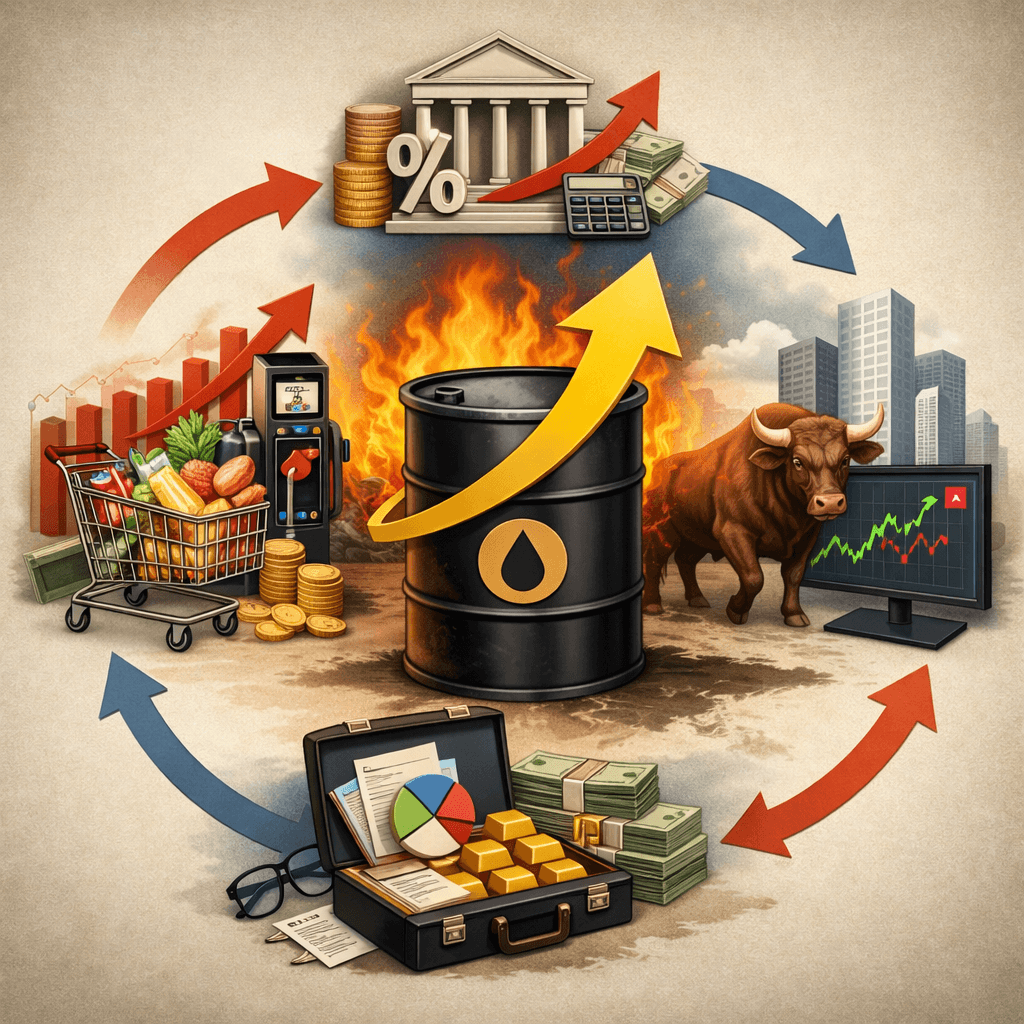
Global oil prices have been highly volatile recently.
Geopolitical risks in the Middle East
and supply uncertainty
are causing sharp movements in oil prices.
Many people think:
“If oil rises, fuel just becomes more expensive.”
But the reality is very different.
Oil prices are a core variable
that affect the entire economy and asset markets.
In this article, we break down
how rising oil prices connect to:
- inflation
- interest rates
- stock markets
- and portfolio strategy
1️⃣ Oil Prices Are the Starting Point of the Economy
Oil is not just an energy price.
It directly affects:
- transportation costs
- production costs
- raw material prices
In other words,
oil is a base cost of the economy.
When oil prices rise:
- corporate costs increase
- logistics costs rise
- consumer prices face upward pressure
That’s why oil acts as
the starting point of economic change.
👉 Related reading: What Changes When Bond Yields Rise? The Starting Point of Asset Price Shifts and Portfolio Rebalancing
2️⃣ Rising Oil → Rising Inflation
The first visible effect of rising oil prices
is inflation.
Why?
- higher production costs
- increased transportation costs
These are passed on to consumers.
As a result:
- goods become more expensive
- overall price levels increase
Countries that rely heavily on energy
are affected even more.
👉 Related reading: How Money Flows When Interest Rates Change
3️⃣ Rising Inflation → Pressure for Higher Interest Rates
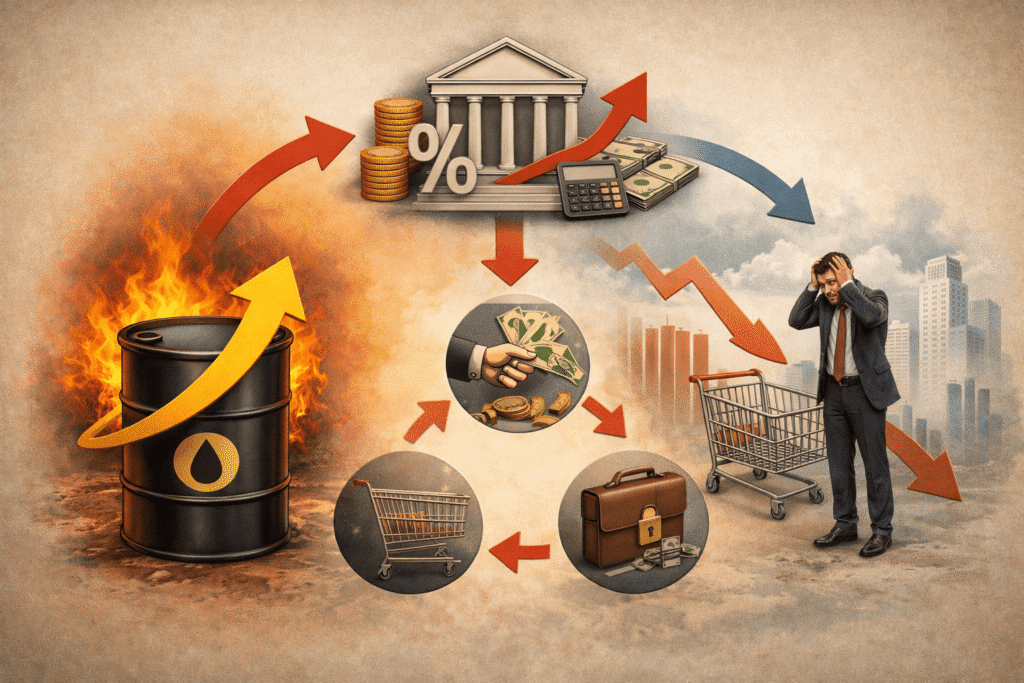
When inflation rises,
central banks respond by adjusting interest rates.
This creates a chain reaction:
Oil ↑ → Inflation ↑ → Interest Rates ↑
When interest rates increase:
- borrowing costs rise
- consumption decreases
- investment slows
This can eventually impact
economic growth.
4️⃣ Higher Interest Rates → Impact on Asset Prices
Interest rate increases affect all asset classes.
Stocks
- growth stocks face pressure
- higher discount rates reduce valuations
Real Estate
- higher loan costs
- reduced capital inflows
Bonds
- prices fall when rates rise
This creates a connected structure:
Oil → Inflation → Rates → Assets
👉 Related reading: How to Rebalance a Portfolio During a Market Downturn — When, How Much, and What to Buy
5️⃣ Portfolio Strategy in a Rising Oil Environment
When oil prices rise,
your portfolio should be reviewed.
Practical strategies include:
- considering some exposure to energy assets
- maintaining cash reserves
- keeping diversification intact
- sticking to long-term principles
The key is understanding
the chain reaction oil creates.
👉 Related reading: Why Portfolio Rebalancing Matters — When, How Much, and What to Adjust
📌 Final Thoughts
Oil prices are not just about energy —
they are a key driver of the entire economy.
When oil rises:
- inflation increases
- interest rates are affected
- asset prices shift
This pattern repeats over time.
That’s why in investing,
it’s not about one variable —
but understanding the entire system.
Markets are always interconnected,
and oil is often one of the starting points.
2 thoughts on “What Happens When Oil Prices Rise — Impact on Inflation, Interest Rates, and Stocks”
Comments are closed.