

A Beginner’s Guide to Understanding the Interest Rate–Currency Structure
When talking about exchange rates, the conversation often leads to this question:
“So… does the exchange rate move because of interest rates?”
In the news, we constantly hear about rate hikes and rate cuts—
and at the same time, exchange rates swing sharply.
When I first started investing, I found it surprisingly hard to find clear explanations of how these two are structurally connected.
Today, let’s break it down step by step—from basic concepts, to structure, to how investors should think about it.
1️⃣ Interest Rates Are the “Money Movement Button”
Interest rates are not just numbers.
They are signals that tell money where to go.
- When interest rates rise
- Deposits and bonds become more attractive
- Capital flows into that country
- When interest rates fall
- Yield attractiveness declines
- Capital starts looking for alternatives
In short, interest rates set the direction of money flows.
👉 Related reading: [How Money Flows When Interest Rates Change]
2️⃣ Interest Rate Gaps Move Exchange Rates
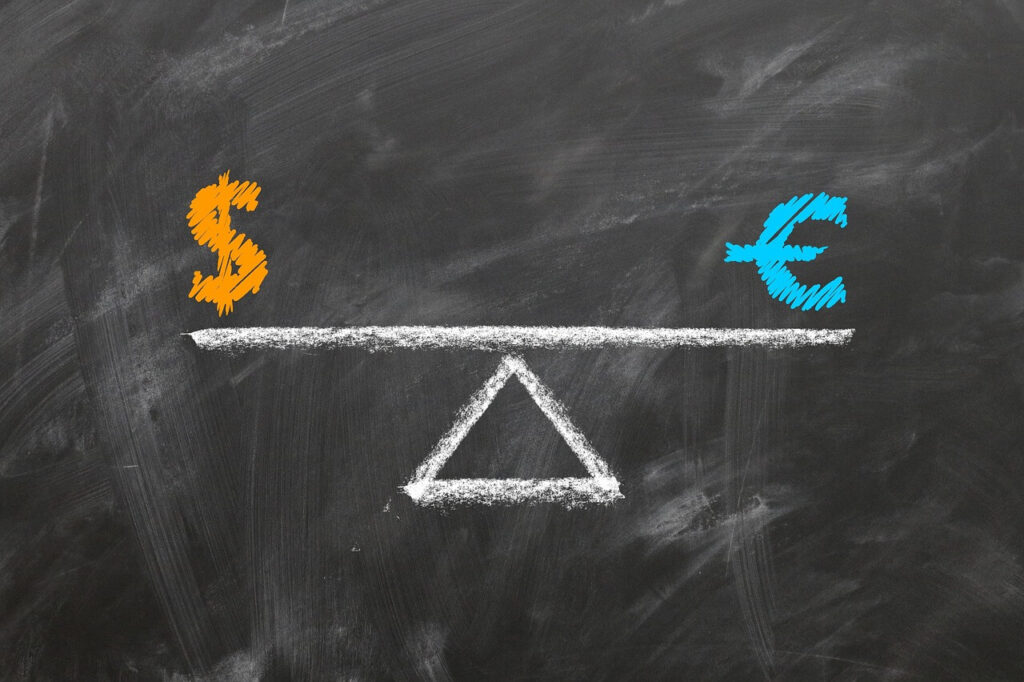
Exchange rates react strongly to interest rate differences between countries.
- If one country has higher interest rates:
- Capital flows into that currency
- Currency value rises
- If the interest rate gap narrows:
- Capital movement slows
- Exchange rates stabilize or reverse
So while exchange rates may look independent on the surface,
interest rate conditions are always operating in the background.
3️⃣ Does Interest Rate Change Always Come First?
This is where many beginners get confused.
“If interest rates rise, does the exchange rate always move the same way?”
Not necessarily.
Why?
- Rates already priced in
- Markets often move before official rate decisions
- Other variables intervene
- Inflation, economic growth, politics
- Safe-haven demand
A stable way to understand this is:
Interest rates set the direction.
Exchange rates show the result.
👉 Related reading: [How Exchange Rates Change Asset Value — A Beginner-Friendly Guide to Understanding Currency Impact]
4️⃣ For Investors, Prediction Is Not the Goal
Once you understand this structure, one key perspective changes:
- Don’t try to predict interest rates or exchange rates
- Adjust asset roles based on changing environments
- Avoid betting everything on a single variable
For example:
- When rate changes are expected
- When exchange rate volatility increases
What you need is not a perfect forecast—but a structure that can endure.
👉 Related reading: [Asset Allocation by Interest Rate Environment — How Should Cash, Bonds, and ETFs Be Balanced?]
5️⃣ Treat Interest Rates and Exchange Rates as the Background
Interest rates and exchange rates matter—but they are not the main characters of investing.
They are:
- Variables we cannot control
- Reference points for designing asset structure
Which naturally leads to the next questions:
- What role do dollar assets play in these environments?
- How should cash, dollars, and ETFs work together?
👉 Related reading: [A Beginner’s Guide to Asset Structure — Why Order Matters More Than Accounts]
📌 Final Thoughts — Focus on Structure, Not Numbers
In the media, interest rates and exchange rates are often presented dramatically.
But in investing, the key question isn’t:
“Will it go up or down?”
It’s:
“What role does my asset play in this environment?”
Once you stop treating interest rates and exchange rates as prediction targets
and start viewing them as changing backgrounds,
investing becomes much simpler—and calmer.
3 thoughts on “How Do Interest Rates and Exchange Rates Move Together?”
Comments are closed.