
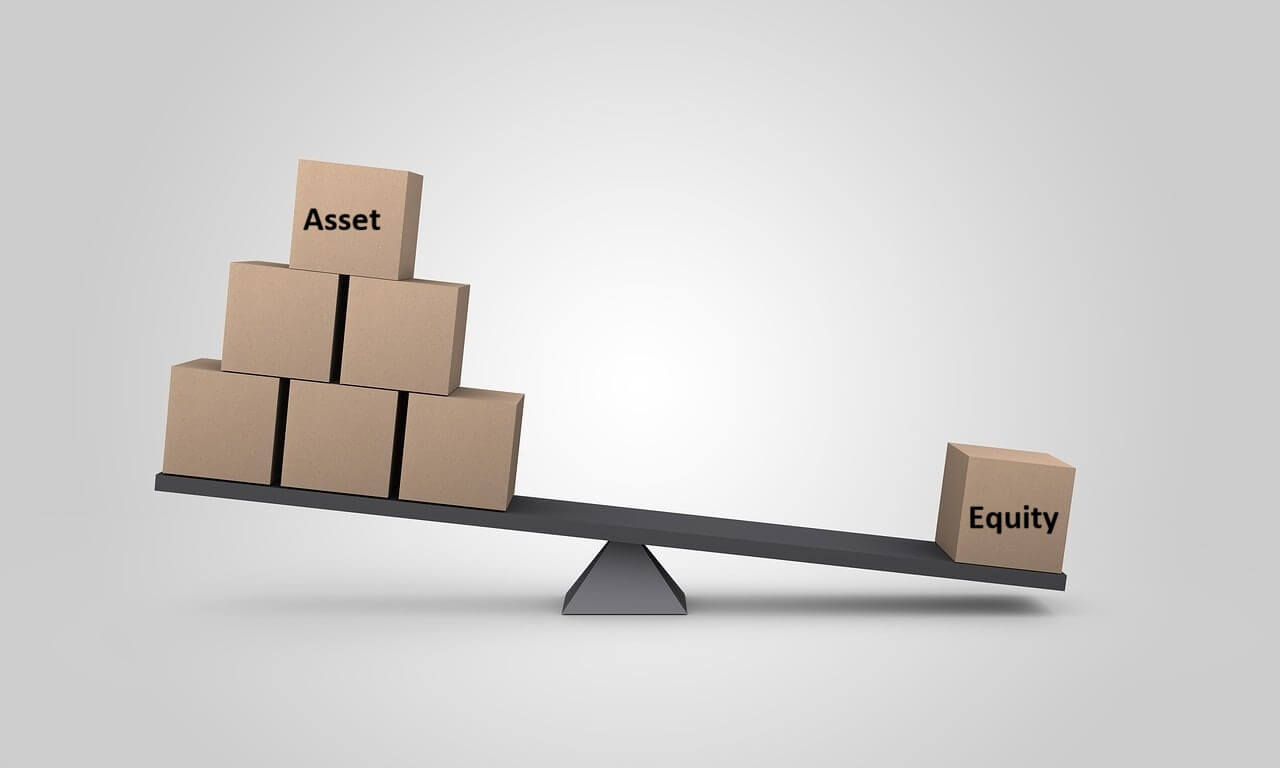
Many investors have heard this idea:“Leverage helps increase returns.”
That statement is true.
But there is another important fact investors should understand at the same time.
Leverage increases profits,
but it also increases losses at the same speed.
In this article, we’ll break down the structure of leverage using simple numbers
and explain why it can be considered a “double-edged strategy.”
1️⃣ Leverage Amplifies Returns
Let’s assume a simple investment scenario that uses both equity and borrowed money.
- Personal capital: $100,000
- Loan: $100,000
- Total investment: $200,000
Now suppose the asset price rises by 10%.
$200,000 × 10% = $20,000 profit
Return based on personal capital:
$20,000 ÷ $100,000 = 20% return
Without leverage, investing only $100,000 would have produced a 10% return.
By using leverage, the same price increase produces double the return on equity.
This amplification effect is exactly what makes leverage attractive.
👉 Related reading: Real Estate vs ETF Investing — Which Is Better With $100,000?
2️⃣ Losses Are Amplified the Same Way
Now consider the same situation, but with a 10% price decline.
$200,000 × –10% = –$20,000 loss
Loss based on personal capital:
$20,000 ÷ $100,000 = –20% loss
As shown above, leverage doubles gains —
but it also doubles losses.
If investors fail to understand this structure,
leverage can quickly become a dangerous financial tool.
👉 Related reading: The Critical Difference Between Wealth-Building Debt and Consuming Debt
3️⃣ Interest Costs Change the Structure
Leverage is not simply a multiplication effect.
Borrowed money always comes with interest costs.
Assume the following:
- Loan: $100,000
- Interest rate: 5%
Annual interest cost:
$5,000 per year
Even if the asset price rises by 5%,
the profit after interest may become very small.
This leads to an important principle of leveraged investing:
The asset’s growth rate must be significantly higher than the borrowing cost.
If the difference between those two numbers is small,
leverage may actually reduce net returns.
👉 Related reading: Asset Allocation by Interest Rate Environment — How Should Cash, Bonds, and ETFs Be Balanced?
4️⃣ Leverage Creates Cash Flow Pressure
When ETF prices decline,
investors are not required to immediately pay additional money.
But leverage works differently.
Leveraged investments may involve ongoing financial obligations such as:
- monthly interest payments
- principal repayment
- vacancy risks (for real estate)
- maintenance costs
If cash flow becomes unstable,
investors may be forced to sell assets even if those assets are fundamentally strong.
The real danger of leverage often appears not from price fluctuations
but from cash flow breakdown.
👉 Related reading: What Happens When Cash Allocation Increases? The Beginning of Portfolio Stability and Capital Flow Changes
5️⃣ Leverage Is More About Management Than Size
Using leverage itself is not necessarily dangerous.
The real risk appears when leverage is used without proper management.
Many investors eventually realize that
cash flow sustainability matters more than simply maximizing returns.
Before using leverage, it can be helpful to consider worst-case scenarios:
- sudden interest rate increases
- extended vacancies or income interruptions
- declining asset prices
- rising taxes or maintenance costs
If the investment structure remains stable even under those conditions,
then leverage may be reasonable.
In that sense, leverage does not only magnify profits.
It also reveals the weaknesses within an investment structure.
📌 Final Thoughts
Leverage increases profits.
But it also increases losses at the same rate.
A strategy that appears safe when using only personal capital
may reveal significant weaknesses once leverage is applied.
In addition, interest payments introduce fixed costs
that fundamentally change the investment structure.
Leverage involves three core elements:
- amplified returns
- interest expenses
- cash flow risk
Investing is not simply a game of maximizing returns.
In many cases, it is a process of building a structure
that can survive long enough to succeed.
And leverage can either strengthen that structure
or expose its vulnerabilities.
1 thought on “How Leverage Works — Why It Can Double Both Gains and Losses”
Comments are closed.