
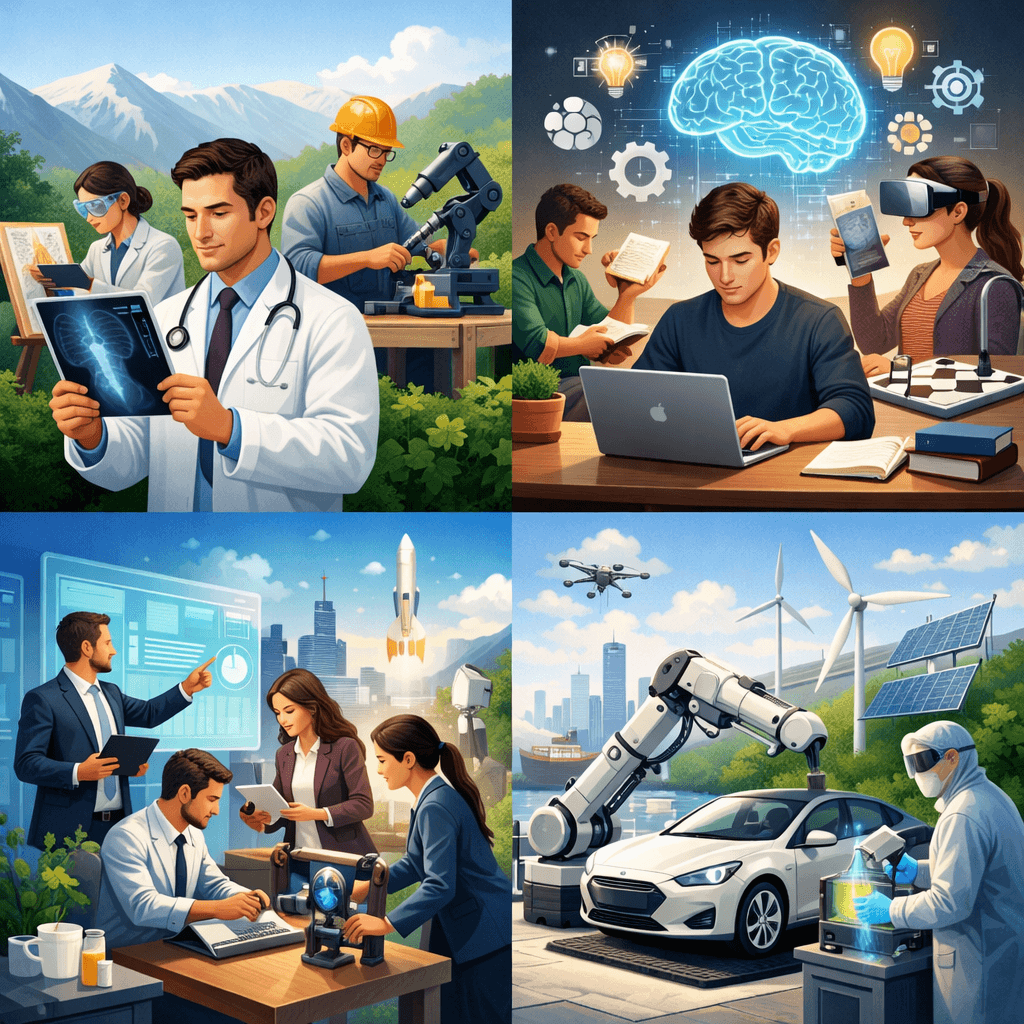
AI is increasing productivity,
but it is also reshaping the structure of jobs.
In the previous article, we explored five job categories
that may be affected by AI:
- data entry and administrative work
- basic customer service
- translation
- content creation
- basic accounting
In the AI era,
repetitive and rule-based tasks are most likely to be automated.
In this article, we explore
five additional job categories that may change significantly.
👉 Related reading: Jobs That May Disappear in the AI Era (1) — 5 Roles Most Likely to Be Automated
1️⃣ Basic Design Work
AI design tools are evolving rapidly.
Today, AI can generate:
- images
- logos
- simple design layouts
- templates
Tasks that once required professional designers
can now be done by individuals with basic ideas.
As a result,
repetitive or template-based design work
may increasingly be automated.
However:
- brand strategy
- creative direction
- artistic expression
still rely heavily on human input.
👉 Related reading: Skills You Need in the AI Era — 5 Traits of People Who Will Succeed
2️⃣ Logistics and Transportation Work
AI is also transforming the logistics industry.
Key technologies include:
- autonomous driving
- automated logistics systems
- delivery robots
As these technologies develop,
the structure of logistics and transportation may change.
Jobs focused on simple transportation tasks
are more likely to be affected by automation.
👉 Related reading: AI Industry Outlook 2026 — Top Industries Driving Growth and Investment Trends
3️⃣ Repetitive Manufacturing Jobs
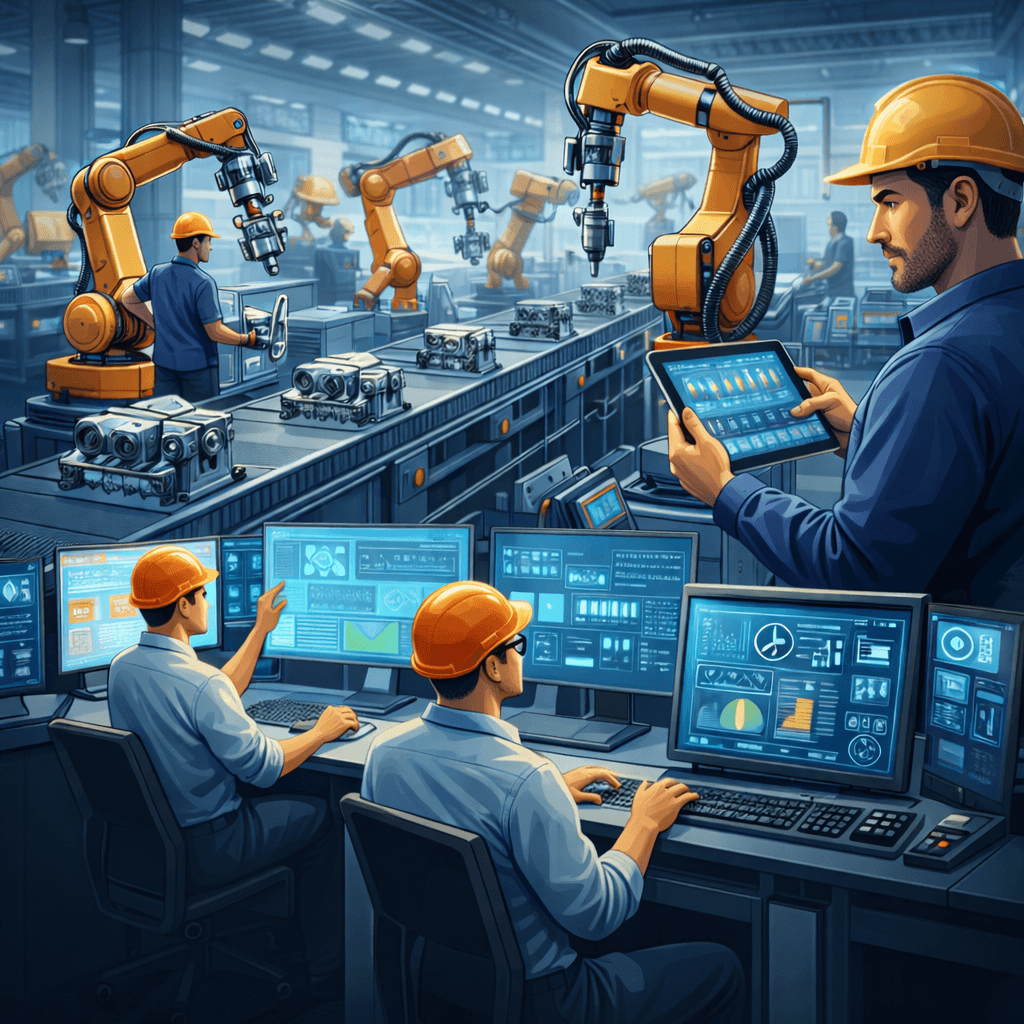
Automation has already been widely adopted in manufacturing.
Especially in areas such as:
- repetitive production tasks
- assembly line work
- standardized processes
These types of jobs are highly automatable.
However:
- system management
- production strategy
- process optimization
remain human-driven roles.
4️⃣ Basic Data Analysis Work
AI is extremely effective at analyzing data
and identifying patterns.
Tasks such as:
- basic data analysis
- simple statistical work
- repetitive data processing
are increasingly being automated.
This shift may create uncertainty
for those entering data-related careers.
However, higher-level roles remain important:
- defining problems
- designing analytical frameworks
- supporting decision-making
These areas still require human judgment.
👉 Related reading: How Money Is Made in the AI Era — The Shift in Wealth Structure
5️⃣ Basic Research and Information Gathering
AI can quickly search, organize, and summarize large amounts of information.
Examples include:
- information search
- basic research
- data summarization
These tasks can now be performed rapidly by AI tools.
As a result,
routine research work may be largely automated.
However:
- setting research direction
- interpreting information
- generating insights
still depend on human thinking.
📌 Final Thoughts
AI may change or reduce certain jobs,
but it will not eliminate all work.
As technology evolves:
- new industries will emerge
- new roles will be created
AI is strong at:
- repetitive tasks
- data processing
- automation
But still limited in:
- problem definition
- creative thinking
- strategic judgment
This leads to a key shift:
From execution → to thinking and direction
Even in the AI era,
human roles are not disappearing —
they are evolving into new forms.
1 thought on “Jobs That May Disappear in the AI Era (2) — More Roles Likely to Be Automated”
Comments are closed.