
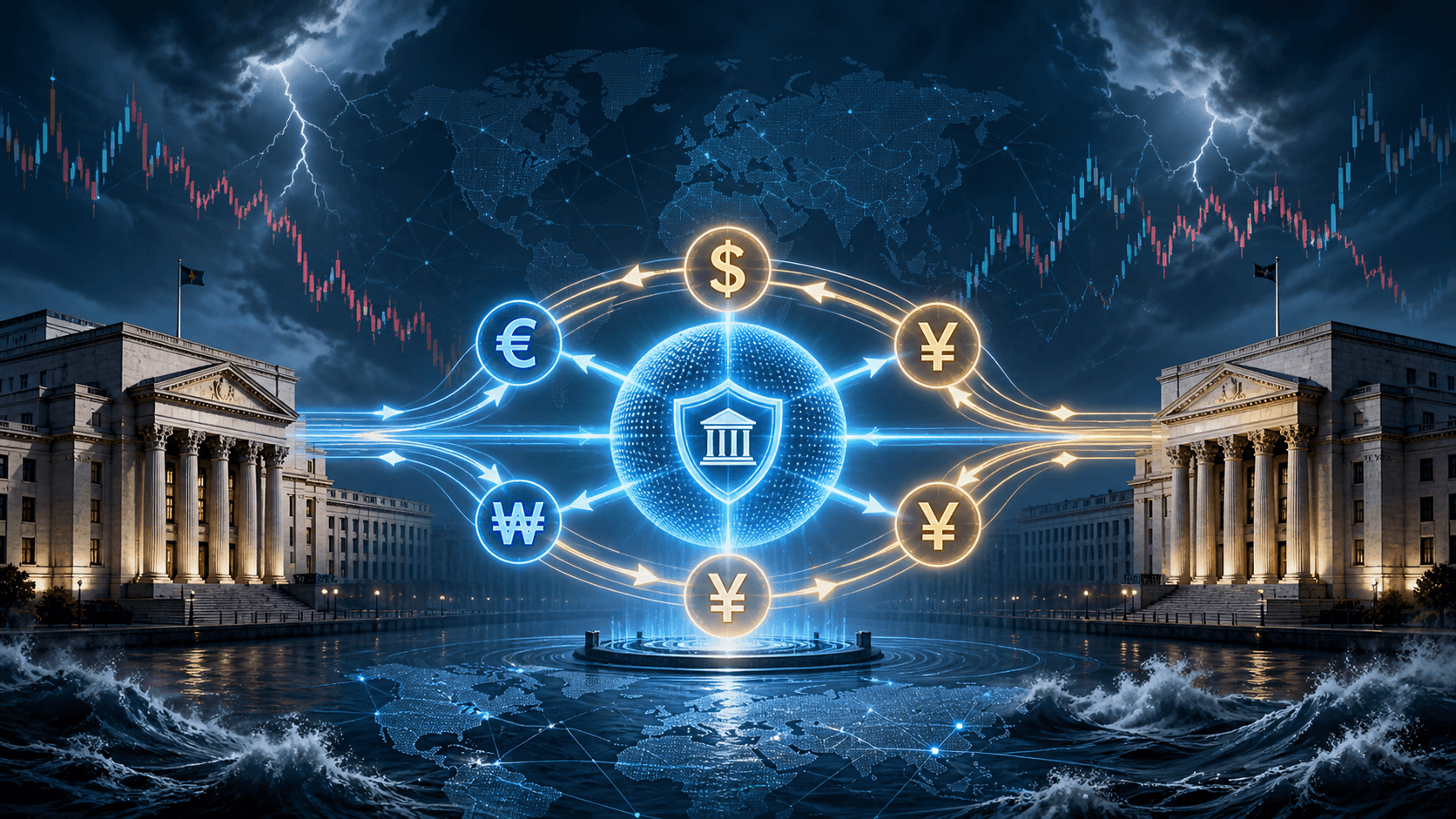
When exchange rates become unstable or financial markets start shaking,
one term suddenly appears everywhere in the news:
- “currency swap.”
You often hear that countries are:
- requesting currency swaps
- signing swap agreements
- discussing dollar liquidity
But for many people,
it is still difficult to clearly understand:
- what a currency swap actually is
- why it matters so much
- how it affects markets and investments
I personally felt this more clearly while living abroad and dealing with remittances, currency exchange, and investments.
Even small changes in exchange rates could noticeably affect:
- living expenses
- tuition payments
- travel costs
- investment returns
Especially during periods when the Korean won weakens or the US dollar strengthens,
exchange rates stop feeling like abstract numbers in the news.
👉 They directly affect real life.
And at the national level,
the impact becomes even larger.
Companies need dollars to buy raw materials and pay overseas suppliers.
Banks must manage foreign currency liquidity.
Governments and central banks try to prevent:
- exchange rate spikes
- financial panic
- dollar shortages
That’s why a currency swap is not just a financial term.
👉 It is directly connected to exchange rates, the US dollar, and national economic stability.
In this article,
we’ll look at:
- what a currency swap is
- why countries need it
- how investors should understand it
in a simple and practical way.
1️⃣ A Currency Swap Is Basically a Mutual Lending Agreement
A currency swap can be explained simply like this:
👉 two countries temporarily exchange currencies with each other.
For example, if Korea and the United States establish a currency swap:
- Korea provides Korean won
- The United States provides US dollars
This creates a structure where Korea can access dollars when needed.
The important point is not the transaction itself.
👉 The important point is creating access to dollars during emergencies.
That’s why a currency swap acts like:
- an emergency funding line
- a financial safety valve
- a crisis-response tool
Most of the time, it may not even be used.
But during financial stress,
it becomes extremely important.
2️⃣ Why Is the US Dollar So Important?
The core of the system is the US dollar.
In the global economy,
the dollar is not just another currency.
👉 It is the world’s primary settlement currency.
Most global transactions happen in dollars:
- oil trading
- international trade
- financial markets
- global debt settlement
Because of this structure,
during crises, countries and companies suddenly rush to secure dollars.
This creates what markets call:
👉 a “dollar shortage.”
And when dollars become scarce, several problems can happen simultaneously:
- exchange rates surge
- financial markets become unstable
- companies struggle to obtain funding
That is why dollar liquidity becomes extremely important during crises.
👉 Related reading: Investment Strategy in a Weak Currency Era — How Exchange Rates Impact Assets and What to Do
3️⃣ Why Currency Swaps Matter During Financial Crises
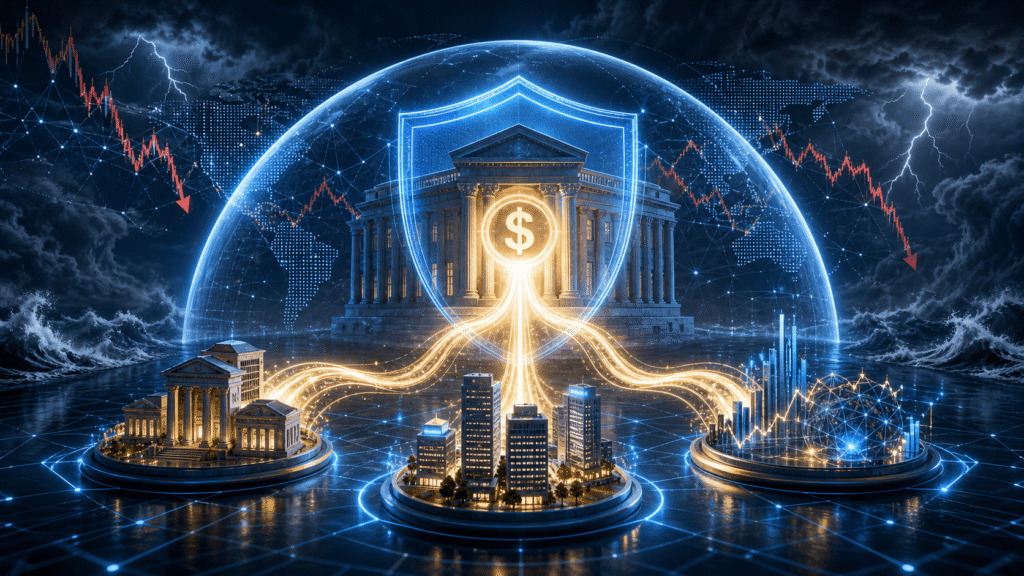
During market panic,
obtaining dollars through normal market channels can become difficult.
This is where currency swaps become critical.
If a swap line exists,
a central bank can directly secure dollars from another central bank.
Those dollars can then be supplied to:
- banks
- companies
- financial institutions
- domestic markets
This helps calm panic quickly.
In other words, currency swaps help:
- stabilize exchange rates
- reduce financial stress
- prevent liquidity shortages
- protect the banking system
That’s why many countries treat currency swaps almost like:
👉 national financial insurance.
👉 Related reading: Why Bitcoin Gains Attention During Crises — The Dollar System and Asset Structure
4️⃣ Why Can’t Every Country Easily Get a Currency Swap?
Here is an important reality.
Not every country can easily establish a currency swap agreement.
Especially with the United States.
Because the dollar is supplied by the US Federal Reserve,
the US carefully considers:
- economic stability
- financial credibility
- geopolitical trust
- systemic importance
before providing dollar access.
That means countries with:
- stronger financial systems
- stable institutions
- higher international trust
are more likely to receive swap support.
This difference reflects something important:
👉 global financial trust between nations.
5️⃣ How Should Investors Understand Currency Swaps?
Currency swaps matter for investors too.
Because they directly influence:
- exchange rates
- market stability
- dollar liquidity
- investor confidence
When a major currency swap agreement is announced, markets often react positively because investors expect:
- exchange rate stabilization
- reduced panic
- improved liquidity
On the other hand,
if swap agreements are uncertain or unavailable:
- exchange rates may rise sharply
- volatility can increase
- market fear may grow
That’s why investors often interpret currency swaps like this:
- currency swap available → higher financial stability
- no currency swap → higher systemic risk
Understanding this structure helps explain why markets react strongly to swap-related news.
👉 Related reading: How Much USD Assets Should You Hold? — A Practical Portfolio Allocation Strategy
📌 Final Thoughts
A currency swap is not just a technical financial term.
👉 It is a national financial safety mechanism.
When:
- dollars become scarce
- exchange rates surge
- financial systems become unstable
currency swaps can help stabilize markets and restore confidence.
That’s why understanding exchange rates is not just about watching numbers move.
👉 It is about understanding the deeper structure behind money flows.
And in today’s global financial system,
the center of that structure is still the US dollar.
1 thought on “What Is a Currency Swap? — Why It Matters for Exchange Rates, the Dollar, and Financial Crises”
Comments are closed.