
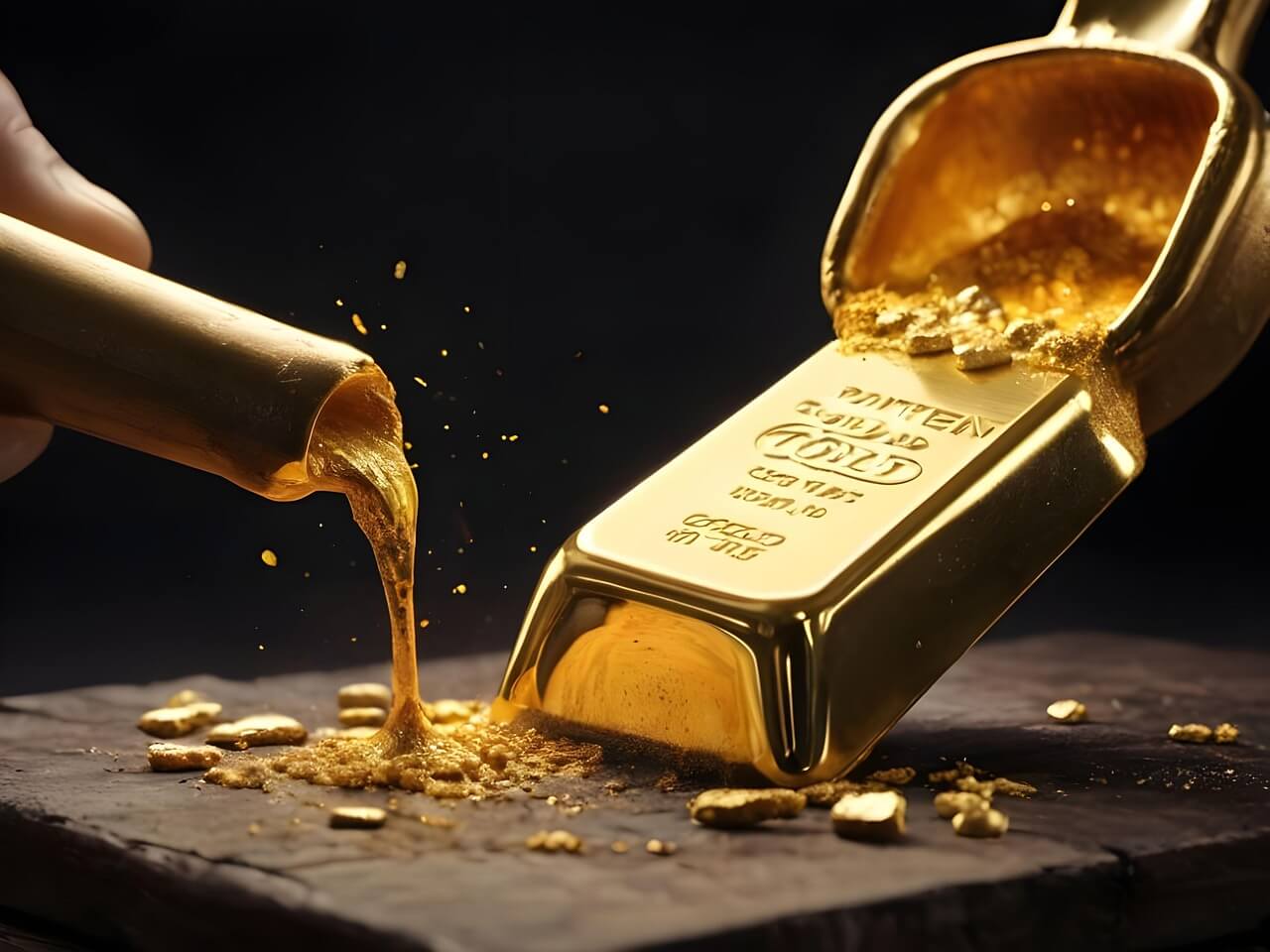
In the past, people often gave gold rings as meaningful gifts.
Today, with gold prices rising so sharply, many would simply give cash instead.
And every time markets become unstable,
one word keeps appearing in the news and in conversations:
Gold.
“Will gold go higher?”
“Should I buy now?”
“Do I need a gold account?”
But if we look at capital flows differently,
gold is not bought because it will rise.
It is bought because uncertainty rises.
Today, instead of discussing gold price forecasts,
let’s examine structurally why capital moves toward gold in uncertain times.
1️⃣ As Uncertainty Increases, Capital Prioritizes Preservation Over Return
When markets are stable, capital seeks:
👉 Higher returns
👉 Faster growth
But when the environment becomes unstable:
- Interest rate direction becomes unclear
- Currency volatility increases
- Stock market predictability declines
Capital shifts its question from:
“How much can I earn?”
to
“How much can I preserve?”
At that moment, return-generating assets feel heavy.
Preservation assets become attractive.
2️⃣ Gold Is Not an Interest Asset — It Is a Reference Asset
Gold pays no interest.
It offers no dividends.
It produces no earnings.
So why does capital choose gold during uncertainty?
Because gold is not someone else’s promise.
- Currency depends on trust in a government.
- Bonds depend on an issuer’s repayment ability.
- Stocks depend on corporate performance.
Gold depends on none of these.
It is not a liability.
It has no issuer.
It carries no default risk.
That is why, when trust in systems weakens,
capital uses gold as an anchor.
👉 Related reading: [How Money Flows When Interest Rates Change]
3️⃣ When Currency and Interest Rates Become Unstable, Gold Gains Neutrality

Large currency movements signal instability in monetary value.
Unstable interest rates mean the “price of money” is unpredictable.
When both fluctuate simultaneously, capital asks:
“Which currency is truly safe?”
“What if the benchmark itself is unstable?”
Gold is not tied to any single currency.
It occupies a neutral position.
That neutrality becomes valuable when traditional reference points weaken.
👉 Related reading: [How Exchange Rates Change Asset Value — A Beginner-Friendly Guide to Understanding Currency Impact]
4️⃣ After ETFs, Why Capital Often Looks Toward Gold
ETFs are excellent starting points in uncertain markets:
- Diversified
- Structurally simple
- Easily adjustable
But as volatility increases,
growth assets alone may not stabilize psychology.
At that stage, capital often turns toward gold —
not to chase returns,
but to stabilize direction.
Gold helps:
- Reduce portfolio volatility
- Create a psychological anchor
- Step back from market swings
👉 Related reading: [Why You Should Start With ETFs When the Market Feels Uncertain — A Re-Entry Strategy That Helps You Stay Steady]
5️⃣ Viewing Gold as a Return Asset Leads to Mistakes
The most common misunderstanding is:
“Gold must generate returns to be meaningful.”
But gold’s primary role is not growth.
In a portfolio, gold:
- Reduces volatility
- Provides structural balance
- Stabilizes investor psychology
Viewed through a short-term return lens, gold disappoints.
Viewed structurally, gold is remarkably consistent.
👉 Related reading: [How Should You Split ETFs in an Uncertain Market? — An ETF Strategy Based on “Roles,” Not Products]
📌 Final Thoughts — Gold Is Not Bought First, Nor for Maximum Profit
Capital often moves into gold after prices have already risen.
This is not because gold is late —
but because it is chosen last.
Gold is rarely:
- The first asset purchased
- The highest-returning asset
But when uncertainty rises,
it becomes the asset capital wants to hold onto the longest.
Gold is not about predicting price.
It is about understanding capital psychology.
3 thoughts on “Why Does Capital Move to Gold in Uncertain Markets? — Looking at Role, Not Price”
Comments are closed.