
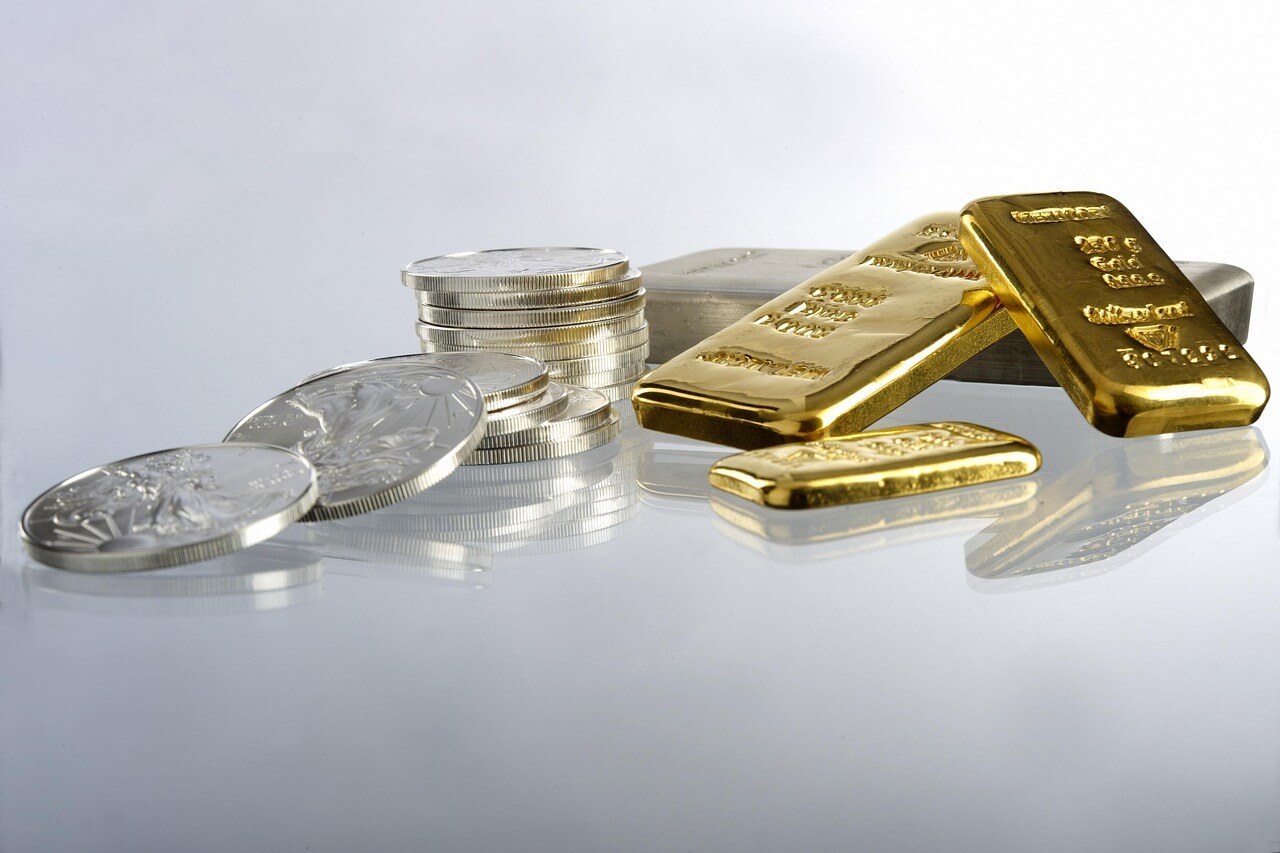
Gold and silver are often grouped together.
Both are precious metals.
Both are mentioned when currencies weaken.
Both are labeled as “safe haven” assets.
But from a capital allocation perspective,
gold and silver do not serve the same role.
Today, instead of asking
“Which one will rise more?”
let’s examine how capital uses them differently.
1️⃣ What Does “Safe Haven” Really Mean?
A safe haven asset does not mean
“an asset that always goes up.”
In capital markets, safety means
reducing exposure to systemic risk.
Safe assets usually serve two purposes:
- A defensive escape during uncertainty
- An alternative store of value during volatility
Gold and silver stand at different positions within these two dimensions.
2️⃣ Gold — The Anchor Asset
Gold is the classic safe haven.
It pays no interest.
It generates no dividends.
It produces no income.
Yet capital chooses gold because:
- It is independent of national fiscal conditions
- It is not directly tied to monetary policy
- It has minimal connection to corporate earnings
- It behaves similarly to cash in crisis scenarios
Gold becomes an anchor when uncertainty rises.
This explains why, during unstable periods,
investors increase holdings through gold bars, ETFs, or gold accounts.
👉 Related reading: [Why Does Capital Move to Gold in Uncertain Markets? — Looking at Role, Not Price]
3️⃣ Silver — A Hybrid of Safe Haven and Volatility Asset
Unlike gold, silver has strong industrial demand:
- Electronics
- Solar panels
- Industrial materials
These sectors directly influence silver prices.
As a result:
- In recessionary environments, silver is less stable than gold
- During recovery expectations, silver can move more aggressively
Silver carries both characteristics:
- The face of a safe haven
- The behavior of a risk asset
This hybrid nature makes it structurally different from gold.
👉 Related reading: [Why You Should Start With ETFs When the Market Feels Uncertain — A Re-Entry Strategy That Helps You Stay Steady]
4️⃣ Capital Does Not Use Gold and Silver at the Same Time

This is the most important distinction.
Capital often flows in stages:
- Sudden uncertainty spike → Gold
- Early rebound expectations → Silver
- Recovery phase → Higher silver exposure
Silver can act like a “more aggressive safe haven.”
But that also means silver is structurally more volatile than gold.
👉 Related reading: [When to Invest Again — 5 Signals That Tell You the Waiting Period Is Over]
5️⃣ Viewing Gold and Silver Through Returns Creates Confusion
If you judge gold and silver purely by short-term performance, confusion follows:
“Why isn’t gold rising?”
“Why is silver so volatile?”
But viewed structurally:
Gold = Portfolio anchor
Silver = Directional exposure during uncertain recovery phases
They are not substitutes.
They serve entirely different roles.
📌 Final Thoughts — Same Metal Category, Different Purpose
Grouping gold and silver under one label blurs asset allocation clarity.
But when separated by role,
capital behavior becomes easier to understand.
Gold answers the question:
“How much do I trust the current system?”
Silver answers:
“Can I expect recovery within this uncertainty?”
Capital may hold both —
but it uses them differently.
2 thoughts on “Gold vs Silver — Same “Safe Haven,” Completely Different Roles”
Comments are closed.