
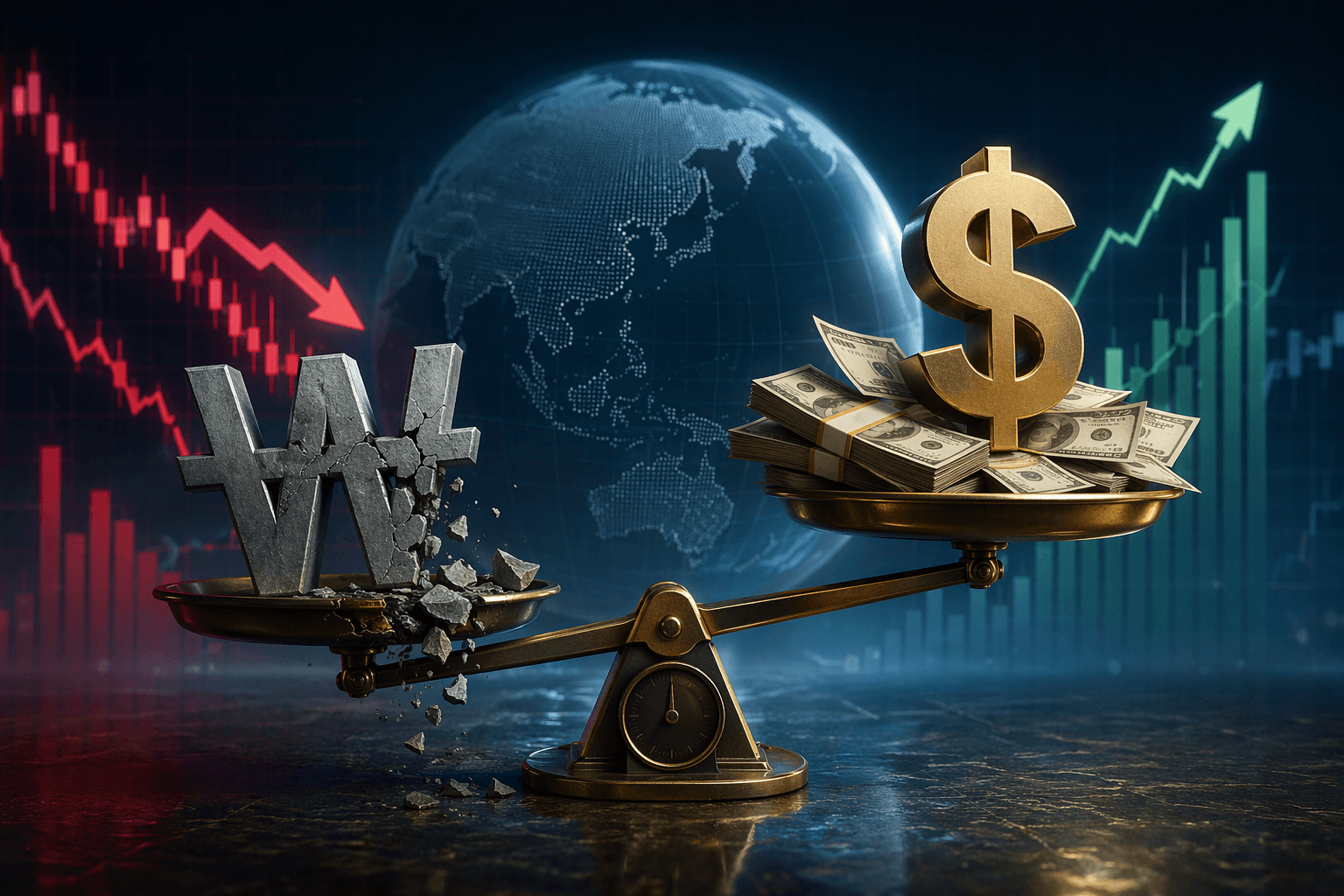
Looking at recent exchange rate movements,
it no longer feels like short-term volatility.
👉 It feels like a long-term trend is forming.
In the past, currency changes were seen as temporary news.
But now, they are starting to look like a structural shift.
- the Korean won is gradually losing purchasing power
- the US dollar is gaining influence
This is not just about:
- travel costs
- exchange fees
👉 It is about the value of your assets changing
Because now:
👉 the same amount of money can have different value
depending on which currency you hold
That’s why exchange rates should not be treated
as just another variable.
👉 They must be part of your investment structure
In this article,
we break down:
- why the Korean won is weakening
- how exchange rates affect assets
- and how to respond as an investor
1️⃣ Why Is the Korean Won Weakening?
Exchange rates are not random numbers.
They reflect:
- economic strength
- capital flows
The recent weakness of the Korean won
is not caused by one event,
but by multiple structural factors.
① Slower economic growth
When an economy grows fast:
- investment inflows increase
- expectations rise
But when growth slows:
👉 capital moves elsewhere
② Interest rate gap with the US
Money flows toward higher returns.
- higher US rates → capital flows into USD
- dollar strengthens
- local currency weakens
👉 Conclusion:
The current exchange rate trend is not temporary.
👉 It is a capital flow-driven structural shift
2️⃣ What Actually Changes When Exchange Rates Rise?
Exchange rate increases affect more than expected.
Most people notice:
- higher travel costs
- higher import prices
But the real impact is deeper.
① Inflation increases
- higher import costs
- higher raw material prices
- higher consumer prices
② Asset value changes
This is the most important point.
If you hold only local currency assets:
👉 your global purchasing power decreases
If you hold dollar-based assets:
👉 exchange rates can protect your wealth
This difference is subtle but critical.
👉 your assets may look unchanged
👉 but their real value is declining
👉 Related reading: Why Interest Rates Move All Assets — The Most Important Investment Factor
3️⃣ Why Korean Investors Are More Exposed
This is not just a currency issue.
👉 It is a portfolio structure issue
Most Korean investors are heavily concentrated in:
- real estate
- bank deposits
- domestic stocks
👉 all denominated in KRW
In this structure:
👉 currency depreciation = hidden asset decline
Globally speaking:
- investors with USD assets → gain relative advantage
- investors with KRW-only assets → fall behind
This gap grows slowly,
but over time, it becomes significant.
👉 Related reading: What Happens When Cash Allocation Increases? The Beginning of Portfolio Stability and Capital Flow Changes
4️⃣ How to Manage Currency Risk
Exchange rates are difficult to predict.
But managing them is not.
👉 The key principle:
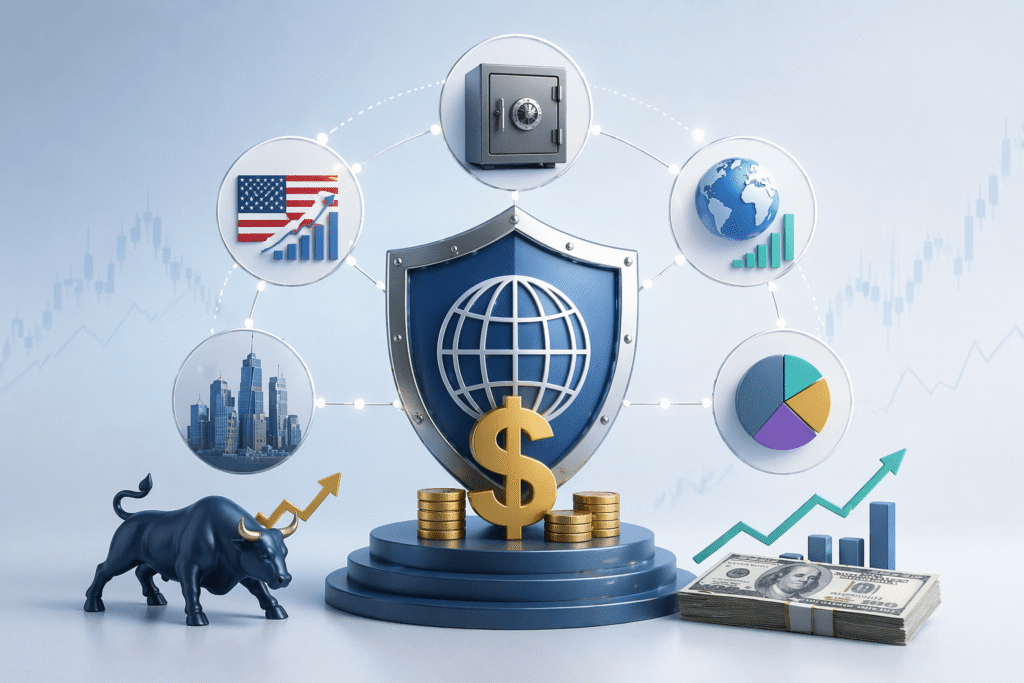
Do not concentrate your assets in one currency
Practical approaches:
- include USD-based assets
- invest in global ETFs
- diversify geographically
For example:
- US equities
- global index ETFs
These naturally provide:
👉 currency diversification
Most important insight:
👉 It’s not about timing
👉 It’s about structure
👉 Related reading: Why Portfolio Rebalancing Matters — When, How Much, and What to Adjust
5️⃣ A Realistic Investment Strategy
The practical approach is simple:
👉 gradually adjust your structure
Not:
- all at once ❌
- but step by step ✔
For example:
- shift part of KRW assets → global ETFs
- add exposure to USD assets
This allows:
- protection during currency depreciation
- participation in global growth
👉 The goal:
Build a portfolio that is less sensitive to currency movements
📌 Final Thoughts
Exchange rate increases are not just market events.
👉 They signal a change in the investment environment
If your assets are only in local currency:
👉 you may gradually lose relative value
If your portfolio includes global assets:
👉 you can maintain stability
The key is not:
👉 predicting exchange rates
But:
👉 building a structure that survives them
Because investing is not about reacting to events.
👉 It is about designing a system that endures change.
1 thought on “Investment Strategy in a Weak Currency Era — How Exchange Rates Impact Assets and What to Do”
Comments are closed.