
Read in Korean → 한국어로 읽기
Recently, global oil prices have been rising,
and many people are feeling the impact.
At times like this, investors start asking:
- Where should I invest when oil prices rise?
- Is it too late to buy energy ETFs now?
Oil is not just a price —
it is a variable that shifts the entire asset market.
But the real question is not:
“Oil is rising.”
It is:
“When and how should I respond?”
In this article, we break down:
- where money flows when oil rises
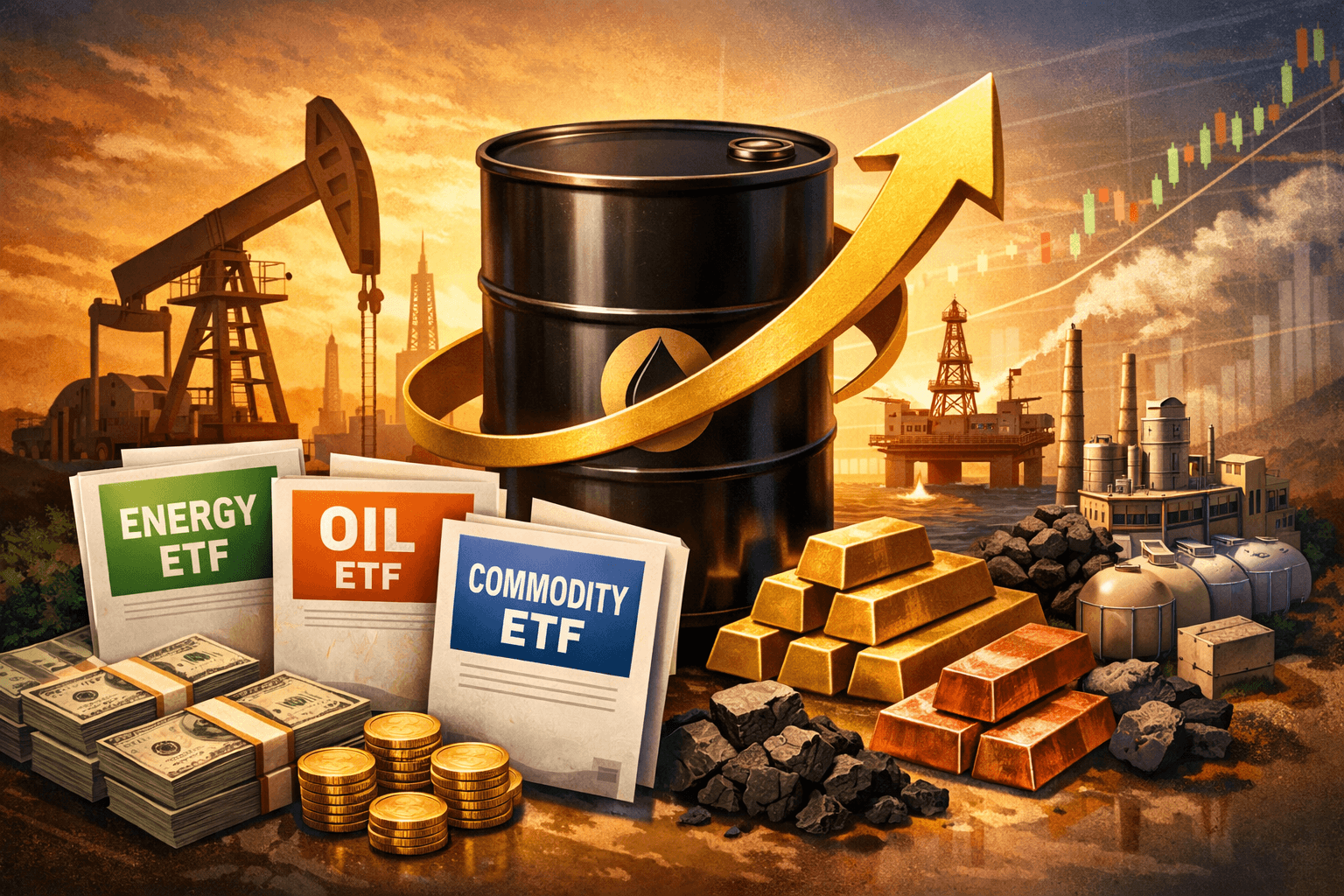
- ETF types that benefit
- and a practical investment strategy
1️⃣ Where Does Money Flow When Oil Prices Rise?
When oil prices increase,
capital tends to move into specific assets.
Typical examples:
- energy companies
- oil refining businesses
- commodity-related assets
Why?
Oil ↑ → Energy company profits ↑ → Capital inflow
That’s why in the early phase of oil price increases,
these assets often move quickly.
👉 Related reading: What Happens When Oil Prices Rise — Impact on Inflation, Interest Rates, and Stocks
2️⃣ Types of ETFs That Benefit from Rising Oil
There are three main categories of ETFs
that tend to benefit from rising oil prices:
① Energy ETFs
- include oil & gas companies
- move with energy sector performance
② Oil & Exploration ETFs
- directly linked to oil prices
- higher sensitivity to price changes
③ Commodity ETFs
- include raw materials
- often used as inflation hedges
Each plays a different role,
so understanding the structure is important.
👉 Related reading: Where Money Flows in the AI Era — Investment Strategy in a Changing World
3️⃣ Is It Too Late to Invest Now?
This is the key question.
The current oil price increase is driven by:
- geopolitical risks
- supply instability
- news-driven momentum
These types of rallies tend to be:
- fast on the way up
- volatile afterward
That means:
👉 part of the upside may already be priced in
So this is not necessarily a
“buy immediately” situation.
4️⃣ The Most Dangerous Phase in Oil Investing
Oil price movements often follow stages:
Early stage
- low attention
- low prices
- opportunity zone
Middle stage
- broader awareness
- rising prices
Late stage
- hype and overheating
- retail investor inflow
- high volatility
The most dangerous phase is the late stage.
Risks include:
- buying near the peak
- sharp corrections
5️⃣ A Practical Investment Strategy
A realistic approach during rising oil prices:
- avoid chasing short-term spikes
- allocate only a portion of the portfolio
- focus on diversified ETFs
- use rebalancing strategies
The key is maintaining
a stable portfolio structure.
Unexpected events — like sudden oil spikes —
can shake investment discipline.
But sticking to long-term strategy
is what protects consistency.
👉 Related reading: Why Portfolio Rebalancing Matters — When, How Much, and What to Adjust
📌 Final Thoughts
Rising oil prices can create opportunities,
but also increase risk.
In the early phase:
- benefiting assets may rise quickly
In later phases:
- volatility increases
That’s why the key is not timing the market —
but understanding the structure.
Investing always involves
both opportunity and risk.
In periods like this,
a more disciplined and cautious approach is essential.
1 thought on “Best ETFs for Rising Oil Prices — Energy & Commodity Investment Strategy”
Comments are closed.