
When investing,
you often see oil prices, interest rates, and exchange rates
moving with volatility.
- Why do interest rates react when oil rises?
- Why does the exchange rate suddenly jump?
- How are these three connected?
Many people try to understand them separately.
But in reality, the market moves as one flow:
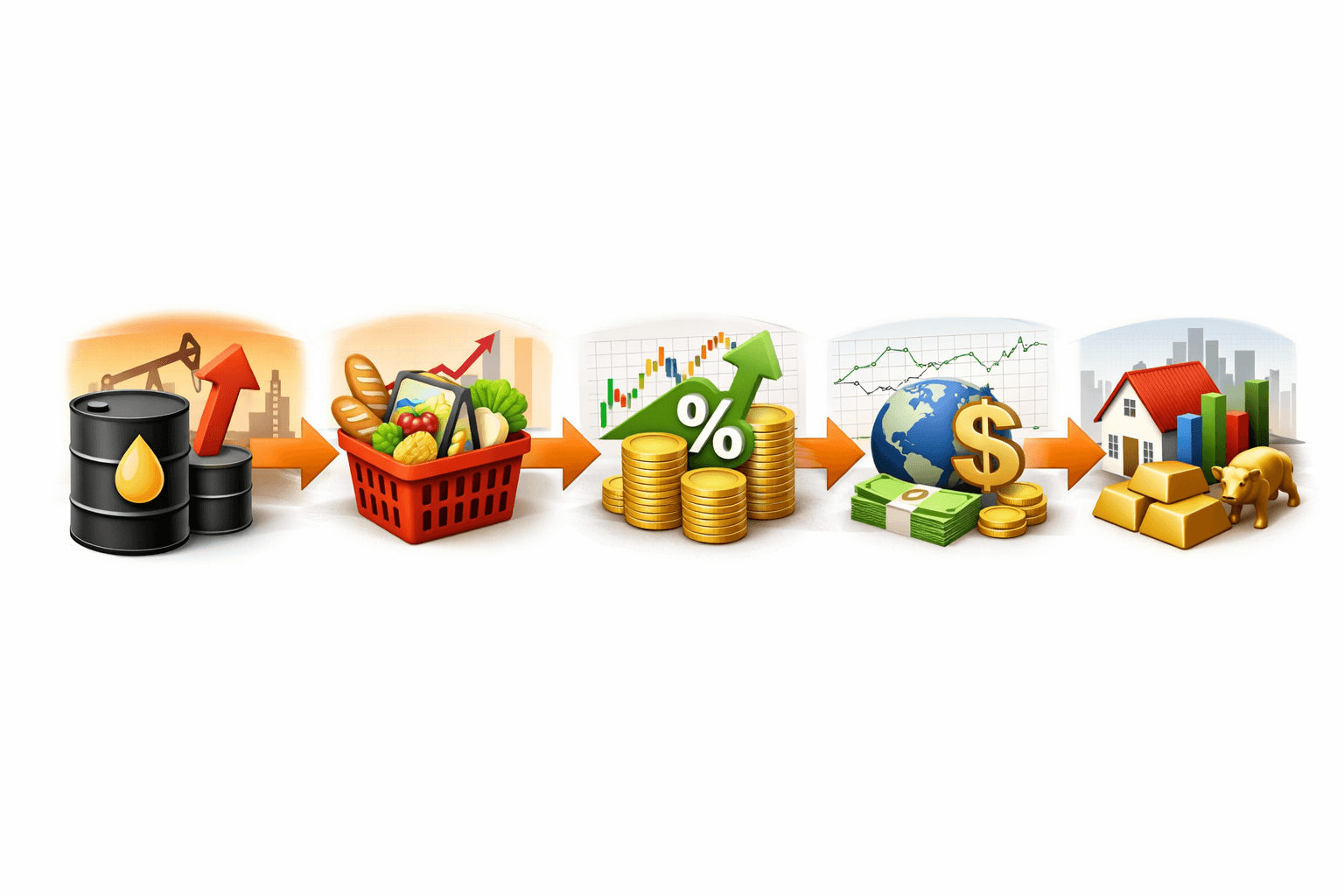
Oil → Inflation → Interest Rates → Exchange Rates → Assets
In this article, we break down:
- how these three variables are connected
- and how they impact asset markets
1️⃣ These Variables Do Not Move Independently
Oil, interest rates, and exchange rates
are interconnected.
Oil
- energy price
- base cost of the economy
Interest Rates
- cost of money
- controls consumption and investment
Exchange Rates
- value of currency
- reflects capital movement
They may seem separate,
but in reality they move within one system.
👉 Related reading: What Happens When Oil Prices Rise — Impact on Inflation, Interest Rates, and Stocks
2️⃣ Oil → Inflation → Interest Rates
When oil prices rise:
- production costs increase
- logistics costs rise
This creates inflation pressure.
Central banks respond by adjusting interest rates.
So the core structure becomes:
👉 Oil ↑ → Inflation ↑ → Interest Rates ↑
This is a recurring economic pattern.
Even today, rising oil prices
are increasing inflation pressure in daily life.
3️⃣ Interest Rates → Exchange Rates
When interest rates rise,
currency values are affected.
Why?
Capital moves toward higher returns.
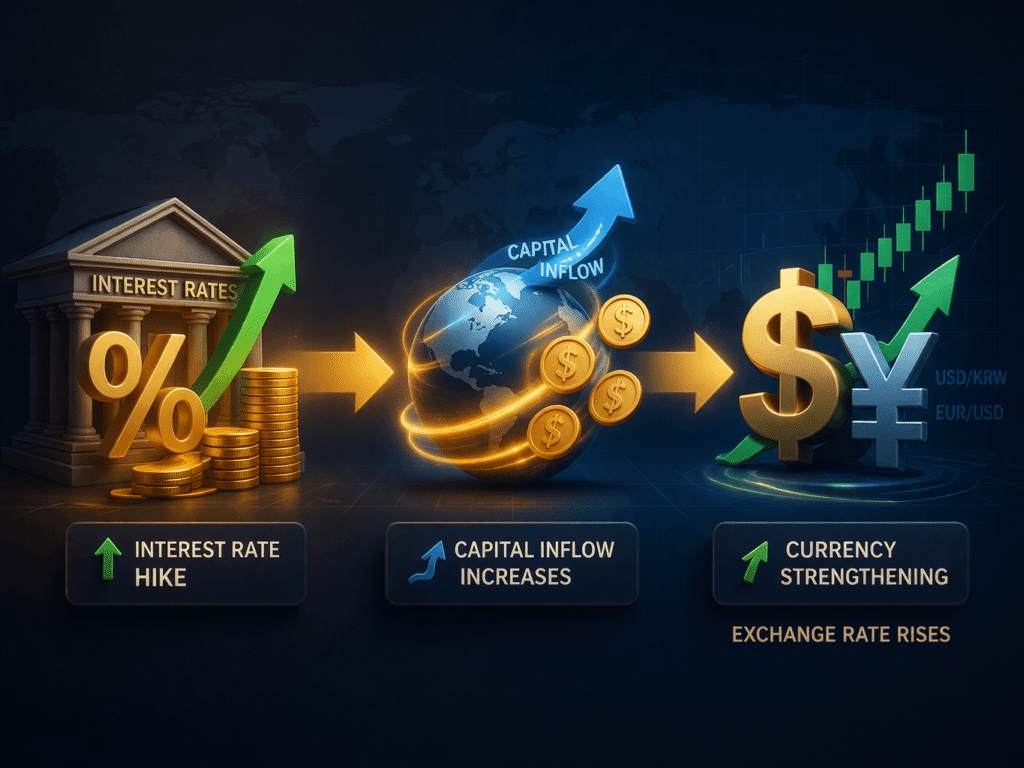
- higher interest rates → more attractive investments
- capital inflows increase
- currency strengthens
So the structure is:
👉 Interest Rates ↑ → Currency Strength ↑ → Exchange Rate Movement
This reflects global capital flow.
4️⃣ Asset Markets Are the Result of This Flow
These variables ultimately impact asset markets.
Stocks
- higher rates → pressure on growth stocks
- exchange rates → affect earnings
Real Estate
- higher rates → increased borrowing costs
Bonds
- higher rates → falling prices
So the chain becomes:
Oil → Inflation → Rates → FX → Assets
👉 Related reading: S&P 500 vs Nasdaq 100 — Long-Term Investment Comparison with $100,000
5️⃣ How to Use This in Portfolio Strategy
Understanding this structure
makes investment decisions clearer.
For example:
- Oil ↑ → inflation risk
- Rates ↑ → pressure on growth stocks
- FX ↑ → stronger dollar assets
This allows you to build strategy.
Practical approach:
- maintain diversification
- manage rate-sensitive assets
- consider global exposure
👉 Related reading: Why Portfolio Rebalancing Matters — When, How Much, and What to Adjust
📌 Final Thoughts
Oil, interest rates, and exchange rates
do not move separately.
They are connected
and move together to shape the market.
What matters in investing is not:
- individual news
But:
- understanding the full structure
Markets may seem complex,
but they follow repeating patterns.
Understanding these patterns
is the starting point of investing.
1 thought on “Oil, Interest Rates, and Exchange Rates — 3 Key Forces That Drive the Market”
Comments are closed.