
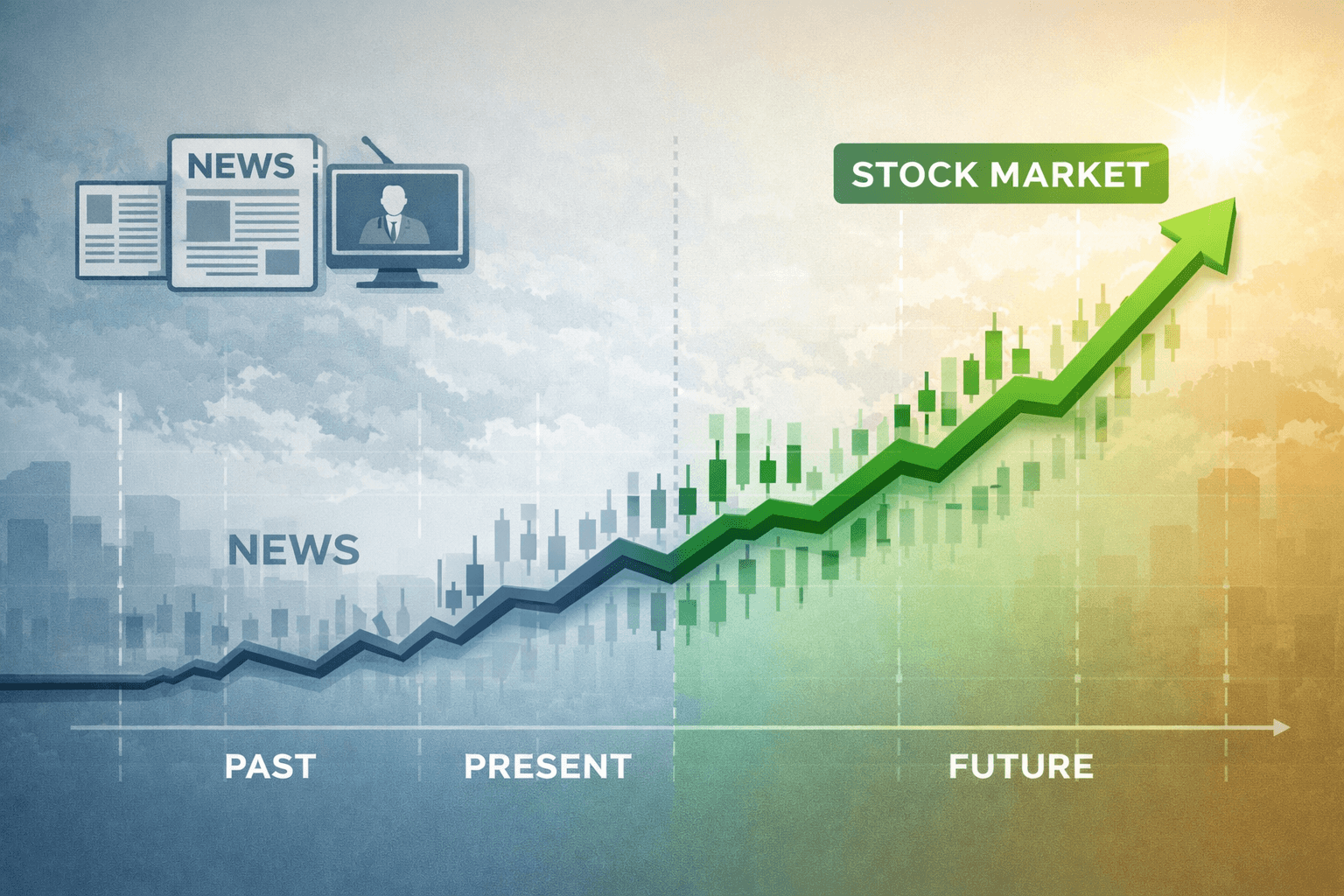
If you look at recent market movements,
you’ll notice a recurring pattern.
- When oil prices rise → markets fall
- When tensions ease (even slightly) → markets rebound
Even when nothing is fully resolved,
the market often moves first.
You may have thought the same:
“Nothing has really improved… so why is the market rising?”
In this article, we break down:
- why markets move ahead of the news
- and what this means for your portfolio
1️⃣ Markets Reflect the Future, Not the Present
The stock market does not reflect current conditions —
it reflects expectations about the future.
For example:
- When the economy is strong → gains are already priced in
- When the economy is weak → declines are already priced in
Markets move not when news appears,
but when expectations change.
Recent rebounds follow this logic:
- Conditions haven’t improved significantly
- But expectations have shifted
👉 Not “things are better”
👉 But “things may not get worse”
👉 Related reading: What Changes When Bond Yields Rise? The Starting Point of Asset Price Shifts and Portfolio Rebalancing
2️⃣ Worst-Case Scenarios Get Priced First
Markets tend to price in
the worst-case scenario early.
When geopolitical risks increase:
- oil surges
- supply disruptions
- inflation fears
Markets react quickly and decline.
But once the worst-case scenario is priced in:
👉 even a small improvement in expectations
can trigger a reversal.
3️⃣ Why Markets Rise Even When Conditions Are Bad
A common misconception:
“Markets rise when things improve.”
In reality:
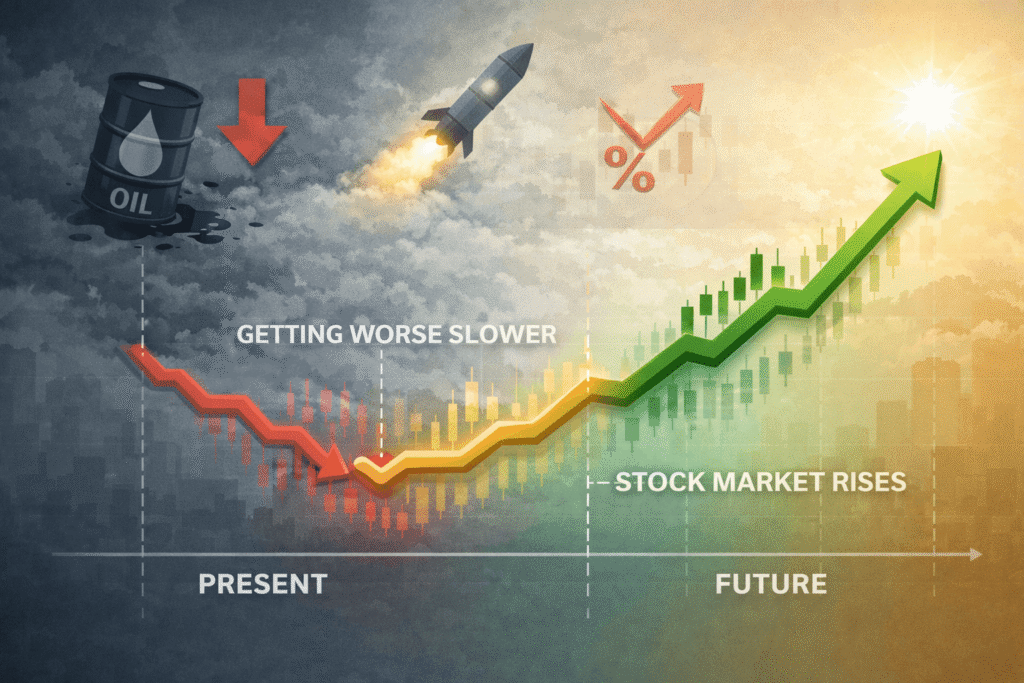
Markets rise when
👉 conditions stop getting worse.
Why?
Because markets are forward-looking.
Investors allocate capital
based on future expectations,
not current headlines.
Signals like:
- slowing oil price increases
- easing tensions
- reduced rate pressure
can trigger early market reactions.
👉 Related reading: What to Invest in When the Dollar Strengthens — Assets & ETF Strategy
4️⃣ Why Individual Investors Are Always Late
If you don’t understand this structure,
you will always lag behind.
Most individual investors follow:
👉 News → Interpretation → Action
But markets follow:
👉 Expectation → Price movement → News confirmation
This leads to a common pattern:
- selling in fear during declines
- buying late during rallies
This cycle repeats.
The reality:
👉 If you rely on news,
you are always one step behind.
5️⃣ How to Apply This in Portfolio Strategy
The key is not timing —
it is structure.
A practical approach:
- during fear → gradual entry
- during hype → reduce exposure
Especially when variables like:
- oil
- interest rates
- exchange rates
are moving together,
👉 asset allocation matters more than market direction.
👉 Related reading: Why Portfolio Rebalancing Matters — When, How Much, and What to Adjust
📌 Final Thoughts
The stock market does not follow the news —
it follows expectations.
That’s why:
- markets can rise even when conditions are bad
- good news often comes after the rally
What matters is not:
👉 what has happened
But:
👉 what the market expects next
Understanding this helps you:
- avoid emotional decisions
- reduce timing mistakes
- build a more stable portfolio
Markets always move first.
And there is always a reason behind it.
1 thought on “Why the Stock Market Rallies Before the News — How Markets Price the Future”
Comments are closed.